14 October 2026
Foundation Repair Website Design: How to Turn Your Website Into a Local Lead Source
Presented by @contractorsbrief729
A foundation repair company rarely needs a website that wins design awards. It needs a website that earns trust quickly, explains a high-stakes service clearly, and turns local search visibility into calls, form submissions, and booked inspections.
That distinction matters. Foundation work is not an impulse purchase. Homeowners land on these sites when something already feels wrong: a crack running above a doorway, a sloping floor, a sticking window, water showing up in a crawl space, or a real estate transaction that suddenly got complicated. The customer is worried, the job is expensive, and the decision carries risk. A weak website makes that anxiety worse. A strong one lowers friction and gives people enough confidence to reach out.
I have seen the same pattern across home service categories. The details differ between plumbing website design, electrician website design, water damage restoration website design, kitchen and bath remodeling website design, solar company website design, and fence contractor website design, but the underlying principle is the same. The best contractor lead generation website does not just look polished. It aligns with the way local customers search, compare, and decide.
For foundation repair, that means your website has to do three jobs at once. It has to be visible in local search, credible on first impression, and easy to act on from a phone. If any one of those pieces is missing, leads leak out.
Why foundation repair websites fail even when they get traffic
A surprising number of contractor websites do attract visitors. They show up for branded searches, a handful of service terms, or traffic driven by a Google Business Profile for contractors. But traffic alone does not mean the site is working.
The common failure points are usually simple. The homepage talks about the company in vague language instead of addressing the customer’s problem. The service pages are thin, with a paragraph or two and no local context. The site loads slowly on mobile, which is where a large share of local traffic tends to come from. The phone number is hard to find. The contact form asks for too much. The service area is unclear. Or the website and Google Business Profile send mixed signals about where the business actually operates.

That last point is especially important for service-area contractors. Google allows a Business Profile for businesses that serve customers at their locations rather than at the business address. If you do not meet customers at your address, the address should be hidden, and the profile should still include a phone number or website representing that location. Service areas should be accurate and specific, and they can be defined by cities, ZIP codes, or other places served. When a website ignores those realities and tries to act like it has offices everywhere, trust drops and local visibility often weakens with it.
A contractor website that generates leads usually feels more grounded. It says what you do, where you do it, how to contact you, and what the next step looks like. Then it makes every one of those answers easy to find.
The homepage should answer the customer’s first five questions fast
When someone lands on your homepage, they are not studying your brand story. They are trying to reduce uncertainty. Most of the time, they want quick answers to a short set of questions: Do you handle my problem? Do you work in my area? Can I trust you? How do I contact you? What happens next?
If those answers are buried, the page will underperform no matter how attractive it looks.
A practical homepage for foundation repair website design usually needs the following elements near the top:
- A clear statement of the primary service and the area served
- A visible phone number and a simple contact path
- Short supporting proof, such as reviews or years in business if you choose to mention them
- A concise explanation of common problems you solve
- A next step that feels low friction, such as scheduling an inspection or requesting an estimate
That is not flashy, but it works because it matches search intent. A homeowner who searched for foundation repair in a specific city wants confirmation that they are in the right place. They do not want to decode a clever headline or scroll through stock photos before finding the phone number.
The strongest homepages also reflect the emotional reality of the sale. Foundation problems make people nervous. Good copy acknowledges the concern without turning the page into fear-based marketing. Calm, direct language tends to convert better than hype. “Cracks in walls, uneven floors, and sticking doors can point to foundation movement. We inspect the issue, explain what we see, and outline the next step” is more useful than a chest-thumping claim about being the number one choice in the region.
Service pages should be specific, not generic
Many contractor websites treat service pages as a box to check. A page titled “Foundation Repair Services” gets two hundred words and a stock image, then the company wonders why the page does not rank or convert.
That approach leaves a lot on the table. Google needs publicly accessible pages it can index, and those pages need to be understandable as distinct resources. Customers also need enough detail to decide whether contacting you is worth their time.
For foundation repair, specificity matters because the problem is rarely abstract. Homeowners search with symptom-based language as often as they search for the main service. They may be worried about bowing walls, slab issues, settling, crawl space concerns, or moisture that appears to be affecting structural stability. Even if you do not build a separate page for every variation, your core service pages should speak to real conditions and explain them in plain English.
This is where good local SEO for home service businesses overlaps with good sales writing. The page should not read like it was written only for a search engine. It should read like a conversation you have had dozens of times in the field. What signs usually prompt the call? What does your inspection process involve? What can a homeowner expect after making contact? What part of the service area do you cover from that office or profile?
Concrete detail builds trust. It also gives the site stronger topical signals than generic boilerplate ever will.
Service-area pages work when they reflect reality
A lot of contractors ask how to get more leads for contractors without increasing ad spend. One of the most reliable answers is to tighten up local service-area coverage on the website.
For a foundation company, that usually means building pages around the cities or areas you genuinely serve from the business location tied to your profile. Google’s guidance is clear that service areas should be accurate and specific. If your company serves a central metro and nearby suburbs, the website should make that geography obvious. If you only serve part of a county, say so. Broad claims create weak pages and confused leads.
The best service-area pages are not clones with city names swapped out. They mention the actual service in that area, give residents confidence that they are within range, and provide a clear action step. They also match the broader business information customers see in Search and Maps. That consistency matters more than many contractors realize.
If your Business Profile says one thing, your website says another, and your contact page suggests something else, the user ends up doing the work of figuring you out. That is rarely good for conversion. A strong foundation repair website design reduces that guesswork.
Your Google Business Profile and your website should work together
A website is rarely the first touchpoint in local search. Quite often, the first interaction is the Business Profile. Google says a verified profile helps customers find a business on Search and Maps, shows essentials like hours, phone, and website, and can direct customers to the website and other actions.
That means your site and profile should be treated as one lead-generation system, not two separate projects.
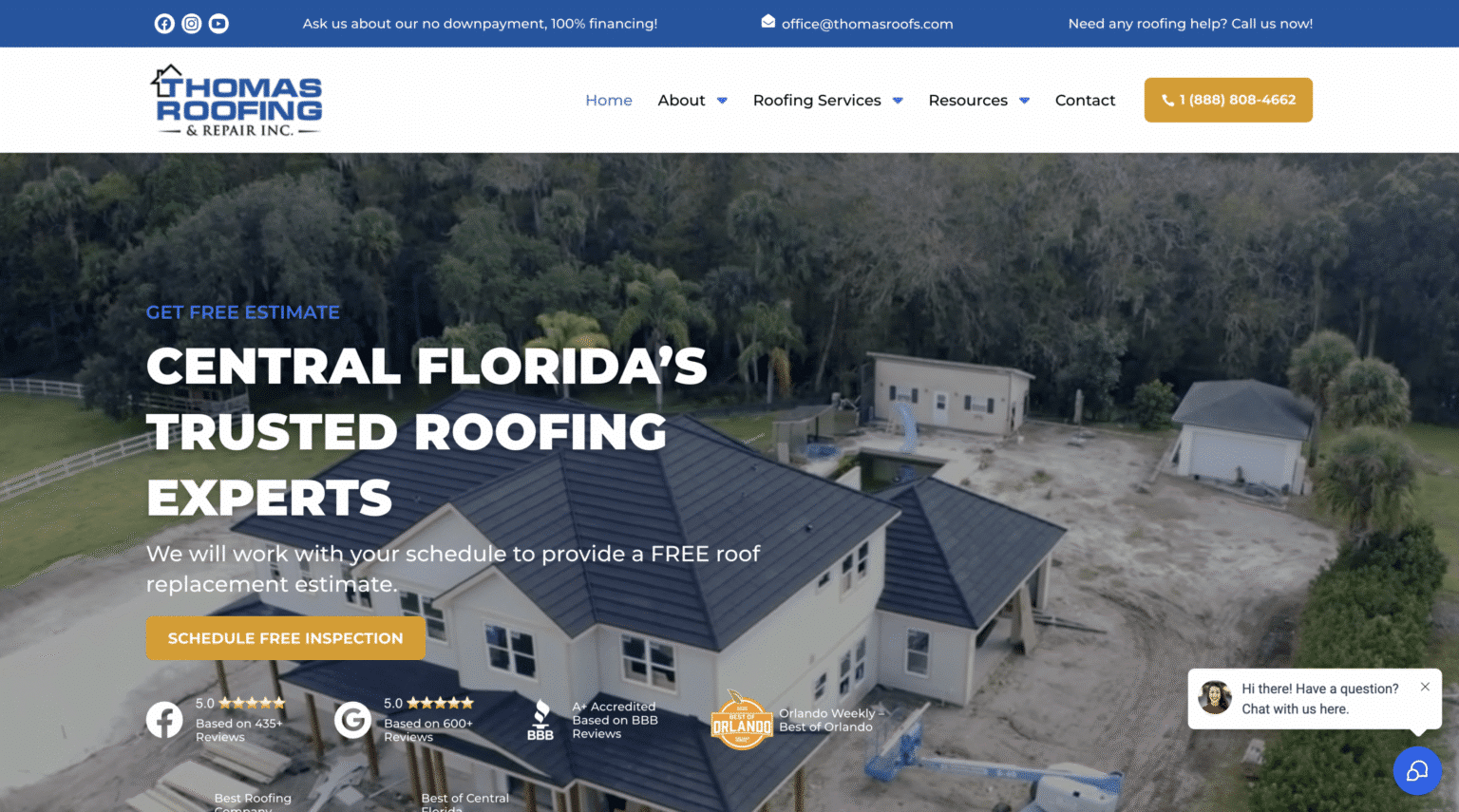
For service-area contractors, make sure the profile is set up in a way that reflects how you actually operate. If customers do not visit your location, the address should be hidden. The service area should be specific. The linked website should represent that same location and service footprint clearly. This sounds basic, but it is one of the most common disconnects I see on contractor sites.
Reviews also tie directly into website performance. Google’s guidance says reviews should reflect genuine experiences, incentives are prohibited, and businesses can ask customers to leave reviews using a review link or QR code. Responding promptly matters too. While the reviews themselves often live on the profile, your website can support this trust-building by featuring selected review language, reinforcing your process, and making the next step easy after a prospect checks your reputation.
For a homeowner deciding between two foundation contractors, the sequence often goes like this: search, compare map results, scan reviews, click website, then either call or leave. If the website feels weaker than the profile, the lead is lost in the handoff.
Mobile speed is not a luxury on a local service website
Contractors sometimes think of speed as a technical detail for developers. It is not. It is a sales issue.
Google recommends good Core Web Vitals for search success, with LCP under 2.5 seconds, INP under 200 milliseconds, and CLS under 0.1. Beyond that, page experience includes mobile friendliness, HTTPS, and avoiding intrusive interstitials that interfere with the main content.
For a local service business, these are practical standards. If a page loads slowly on a phone, the prospect may never see the content you worked so hard to publish. If buttons shift around while the page loads, people tap the wrong thing. If a popup blocks the screen before the customer can read the service summary or find the phone number, you are creating friction at the exact moment they are ready to act.
Foundation repair companies are particularly vulnerable here because many sites lean heavily on oversized image sliders, animations, and packed homepages. Those features often look expensive but perform poorly. I would take a simpler page with fast load times and a clear path to contact over a flashy page that delays the first useful interaction.
This applies across trades. The same issue comes up in plumbing website design, electrician website design, and water damage restoration website design, where urgency is often even higher. Speed supports trust because it makes the business feel responsive before the prospect ever speaks to a human being.
Calls and forms should feel easy, not like work
A website can be visible and credible and still underperform because it asks too much from the lead.
For foundation repair, the first conversion action should be straightforward. A visible phone number is essential. So is a contact form that asks only for information needed to begin the conversation. At this stage, you do not need a long questionnaire that feels like a permit application. Name, contact details, location, and a brief description are often enough to start.
There is also an operational side to lead capture that website owners underestimate. Google’s local services guidance makes it clear that missed-call handling matters, and replying quickly to leads is directly supported in the Google Ads leads workflow. Even if your leads are not all coming from ads, the lesson carries over. A contractor website that generates leads is only as good as the follow-up process behind it.
I have seen companies invest in design, SEO, and paid traffic while letting calls roll to voicemail in the middle of the day. That is not a website problem, but the website gets blamed for poor results. If your site is bringing in qualified prospects and no one is responding quickly, conversion rates will stall no matter how much traffic you buy.
Structured data helps search engines understand local business details
This is one of those areas that users never notice directly, but it can still be worth doing properly. Google’s local business structured data guidance says websites can mark up details such as hours, departments, address, geographic information, and phone numbers to help Google understand local business information.
That does not mean structured data is a magic ranking switch. It means clean, machine-readable business details support clarity. For a foundation contractor, especially one operating as a service-area business, clarity is valuable. It reinforces the same core facts your customers need: who you are, how to reach you, when you are available, and where you work.
The key is restraint and accuracy. Mark up what is real and maintained. Do not clutter the site with technical embellishments that are not backed up by visible, current information.
The strongest websites sound like experienced estimators, not ad copywriters
There is a tone problem on many contractor sites. They either read like legal disclaimers or like aggressive advertisements. Foundation repair sits in a category where neither extreme works especially well.
Customers need confidence, not pressure. Professional language should be plain enough for a stressed homeowner to follow and specific enough to show competence. In practice, that means fewer empty superlatives and more grounded explanation.
A sentence like “We evaluate visible signs of movement, discuss site conditions, and explain the repair options we recommend” does more useful work than a paragraph full of phrases like elite service, unmatched quality, and industry-leading solutions. One sounds like someone who has walked hundreds of homes. The other sounds outsourced.
This is one reason cross-industry copying usually fails. A read more here kitchen and bath remodeling website design can lean more heavily on aesthetics and portfolio storytelling. A solar company website design often has to address financing and energy savings questions. A fence contractor website design may need to simplify material choices and perimeter planning. Foundation repair website design demands more reassurance, more problem clarity, and more emphasis on credibility under uncertainty.
Measure the actions that indicate buying intent
If you want the website to become a local lead source, you need to define what a lead looks like and track whether those actions are increasing. Many contractors only look at traffic, which is useful but incomplete. A page can attract visitors and still fail commercially.
The metrics that usually matter most are the ones tied to intent and response:
- Calls from the website or connected local marketing sources
- Form submissions from service and location pages
- Clicks from the Business Profile to the website
- Response speed to inbound leads
- Which pages actually produce contact actions
This is where many “how to get more leads for contractors” conversations get more honest. Sometimes the answer is not more traffic. It is better conversion on the traffic you already have. If one city page gets visitors but no inquiries, the issue may be weak messaging, poor mobile experience, unclear service fit, or lack of trust signals. If calls spike after profile visibility improves but bookings do not, missed-call handling or slow follow-up may be the real bottleneck.
The website should make diagnosis easier, not harder.
What a local lead source really looks like
A lead-generating website for a foundation repair company is not complicated in theory. It is just disciplined in execution.
The business details are accurate and aligned with the Google Business Profile. The service area is clearly defined and realistic. The pages are public and indexable. The mobile experience is fast, secure, and easy to use. The messaging addresses the actual problems homeowners search for. The contact paths are obvious. Reviews are gathered the right way, based on genuine experiences, and handled professionally. The follow-up process behind the site is quick enough to capitalize on demand.
That is the part many companies miss. A contractor lead generation website is not a digital brochure. It is a system that connects search visibility, trust, usability, and response. Break one link in that chain and performance drops.
When foundation contractors get this right, the results tend to feel less dramatic than people expect. There is no magic trick. The website simply becomes easier to find, easier to believe, and easier to contact. Over time, that is exactly what turns it into a dependable local lead source.