15 October 2026
Home Remodeling Website Design: How to Choose Between DIY, Freelancers, Agencies, and Managed Plans
Presented by @contractorsbrief729
If you run a remodeling company, your website is not a side project. It is often the first estimator, first salesperson, and first credibility check a prospect sees before they ever call. Homeowners do not study a contractor site like a designer studies a portfolio. They scan. They want to know what you do, where you work, whether you look legitimate, and how fast they can reach you.
That is why home remodeling website design is less about flashy visuals and more about clear communication. A strong site tells visitors, within seconds, whether you remodel kitchens, handle full-home renovations, install flooring, build docks, or specialize in a narrower trade. It shows service areas, proof of real work, and an easy next step.
The hard part is not deciding whether you need a website. Most contractors already know they do. The hard part is choosing how to get one built and who should manage it after launch. This is where many owners either overspend, underspend, or get locked into arrangements they do not fully understand.
Most contractor websites are bought one of four ways: through a DIY builder, a freelancer, an agency, or a managed website for small business. Each path can work. Each has trade-offs. The right answer depends on how fast you need to launch, how involved you want to be, how many edits you expect over time, and how much risk you are willing to carry yourself.
The real job of a contractor website
Before comparing providers, it helps to define what your site actually needs to do.
For a lean contractor site, the basics are simple but non-negotiable. Your homepage should quickly state what you do, where you work, and how to contact you. You need clear service messaging, a page that explains your main services, an about page, a service area page, and a contact page. If you handle several distinct services, separate pages usually make sense, especially when those services are different enough that customers search for them separately.
That matters in remodeling because homeowners often arrive with a very specific need. Someone searching for flooring contractor website design examples is thinking about floors, not full-home remodels. Someone looking for epoxy flooring website design or concrete coating website design wants proof you understand that exact service. The same is true for pool screen enclosure website design, dock builder website design, or mold remediation website design. Different trades need different proof points, photos, and language, even if the underlying website structure is similar.
A generic site can make a good company look vague. A focused site makes the business feel established.
There is also a difference between a website that exists and a website that generates leads. If all you need is a credible online presence because most of your work comes from referrals, a lean build may be enough. If you want to rank for multiple services, create service-area pages, support advertising, or keep adding project photos and new pages over time, then the decision gets more serious. That is usually when a cheap build starts looking expensive later.
The four ways contractors usually buy a website
There is no universal best website builder for contractors, and there is no one right hiring path for every company. What changes the answer is the level of support you need after launch.
DIY builders: the lowest upfront cost, with the highest demand on your time
The appeal of DIY is obvious. You can start fast, spend less upfront, and maintain direct control. For a new remodeling company with a very tight budget, that can be enough to get online.
But the budget savings are not always as large as owners expect. The hidden cost is your time, plus the quality gap that shows up when a site needs stronger copy, better structure, more polished design, or trade-specific messaging. Many contractors can build something functional. Fewer can build something that looks trustworthy to a homeowner deciding between three bids.
The DIY route works best when your goals are modest. Maybe you need a clean online business card, a few pages, basic contact info, and a simple portfolio. If that is the case, you may not need a custom process at all.
Where DIY often breaks down is after the first version goes live. Pages stay half-finished. Photos never get optimized. Mobile spacing looks off. Service areas are missing. The site loads slowly because nobody owns the maintenance. Then six months later, the company is shopping for a contractor website redesign anyway.
I have seen this pattern more than once with trade businesses. The owner says, “We already have a site,” but what they really mean is they have a draft that survived long enough to become public.
Freelancers: flexible, often affordable, highly dependent on the person
Hiring a freelancer can be a smart middle ground. A good web designer for contractors can give you better design and better messaging than most DIY builds, often at a lower price than an agency. Freelancers can also be nimble. Decisions happen faster. There are fewer meetings. You usually talk directly to the person doing the work.
That said, the freelancer model varies wildly. One freelancer may be excellent at layout but weak at copy. Another may build attractive pages but leave you confused about hosting, backups, or future edits. Another may disappear after launch because they took a full-time job or became overloaded.
The quality issue is not the only risk. Continuity matters. If your business relies on the site and one person controls everything, from the domain to hosting to login credentials, you have a vulnerability whether the freelancer is talented or not.
Freelancers tend to fit best when you already know what you want, can review work quickly, and are comfortable managing some of the technical ownership details yourself. If you are organized and hands-on, this can be a very efficient path.
Agencies: more process, broader capability, usually a bigger price tag
An agency can make sense when your website needs are bigger than a simple brochure site. Maybe you need stronger brand positioning, many service pages, multiple service areas, and a more strategic approach to conversion. Maybe your business has grown past what a single freelancer can comfortably manage.
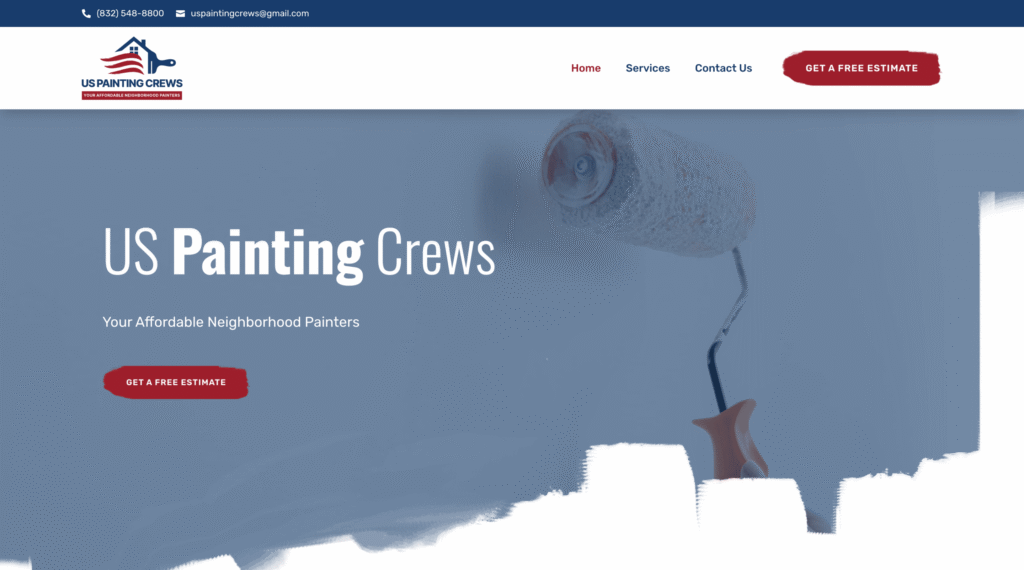
A capable agency usually brings more structure. There is often a clearer production process, more specialized roles, and a stronger ability to scale the work. If your remodeling company is growing across several markets, that support can be valuable.
The downside is cost and complexity. Agencies generally have higher overhead, so pricing reflects that. The process can also feel heavy for small contractors who mostly need a credible, mobile-friendly site with clear calls to action. Not every company needs discovery workshops and long approval cycles just to launch a five- or ten-page site.
This is where the question “how much does a contractor website cost” becomes slippery. A simple site and a lead-generation system are not the same purchase. If your scope is small, agency pricing may feel out of proportion. If your goals are ambitious, agency pricing may be justified.
Managed plans: ongoing support built into the model
A managed website for small business is designed for owners who do not want to handle technical upkeep themselves. Instead of paying for a site and then separately figuring out hosting, security, backups, updates, and edits, those items are bundled into a monthly service.
For contractors, that model can be practical. Remodeling companies are busy. Most owners do not want to think about plugins, SSL setup, software updates, or whether the last backup actually worked. They want the site live, secure, editable, and supported when a page needs to change.
A managed plan is not just about convenience. It changes how future edits are handled. That matters because one of the most common frustrations with low-cost builds is that every small change turns into a bill. Add a service area, update a phone number, swap project photos, revise copy after adding a new service, and suddenly the “cheap” site costs more than expected.
A managed option can remove that friction if the service actually includes support and updates in a meaningful way. One example in website design for contractors the contractor space is Scalable Websites, a Houston, Texas based provider serving contractors nationwide. They offer professionally designed contractor websites on a monthly subscription with hosting, security, unlimited updates, and a dedicated project manager included, and most sites launch in days. For owners who want speed and an ongoing point of contact, that kind of structure can be attractive.
Cost is not just the build price
When owners ask how much does a contractor website cost, they usually mean the number on the proposal. That is understandable, but it is not the full cost.
A website has two price tags: launch and ownership.
Launch is what it takes to get the site built. Ownership is what it takes to keep it useful. That includes hosting, SSL and security, backups, software updates, maintenance, and future edits. It can also include copywriting and content, which are often left vague in cheaper proposals.
If a provider offers a low number upfront but bills separately for every update, does not include backups, and leaves you to manage security, the true cost may be much higher over twelve to twenty-four months. On the other hand, a higher monthly plan may be the better deal if it includes the ongoing work you know you will need.
A flooring business is a good example. A basic flooring contractor website design might launch with a homepage, services page, about page, service area page, and contact page. Fine. But what happens after that? You may want separate pages for hardwood, tile, laminate, refinishing, or luxury vinyl. You may want to post fresh project photos regularly. You may add new service areas. If your business evolves, your site needs to evolve with it. That is where cost decisions become operational decisions.
The ownership questions that matter more than design
Design matters, but control matters more.
Every contractor should know who owns the domain, who controls hosting, who has access to the website platform, and whether the site can be moved if the relationship ends. If those answers are unclear, stop and ask before signing anything.
This is one of the biggest red-flag areas in website hiring. A provider may talk at length about design and still avoid specifics on account access or portability. That should make you nervous. Your website is a business asset. It should not be trapped behind someone else’s logins.
Here are the five questions I would ask any provider before moving forward:
- Will the domain be registered in my business’s name, with my access?
- Who controls hosting and core website accounts after launch?
- What is included after launch, specifically updates, backups, security, and edits?
- If we stop working together, can I move the site elsewhere?
- What content, pages, and revisions are actually included in the quoted price?
Those questions do not need to be confrontational. They just need clear answers. Vague promises are how website headaches start.
When DIY is enough, and when it is not
Some contractors genuinely do not need much. If you are a one-crew operation with strong referral volume, a narrow service offering, and no immediate plans to expand, a modest site can do the job. It can establish legitimacy, help referral traffic verify you, and give people an easy way to contact you.
Where businesses outgrow the basic approach is usually one of four scenarios.
First, they add more services and need separate pages for them.
Second, they start competing in more locations and need clearer service-area coverage.
Third, they realize the site no longer reflects the quality of their work.
Fourth, they want the site to help generate leads rather than just exist.
That shift is easy to miss. A remodeling company may begin with general home remodeling website design needs, then branch into a more specialized market. A coatings company may suddenly need dedicated concrete coating website design and epoxy flooring website design pages because the audience and project examples differ. A marine contractor may need dock builder website design that shows location-specific work and trade-specific trust signals. The more specialized the service, the less effective a generic page becomes.
How to spot a site that needs a redesign
A contractor website redesign is usually justified well before the site is completely broken. In practice, the warning signs show up gradually. The site looks dated. It loads slowly. It is hard to edit. It does not work well on mobile. The trust signals are weak. The service pages are thin or missing. The business has changed, but the website still reflects the old version of the company.
Sometimes the problem is even simpler. The website does not quickly explain what the company does and where it works. If a homeowner lands on your homepage and has to hunt for those two answers, the site is underperforming.
A redesign is also worth considering when your strongest work is invisible online. For visually driven trades, that hurts. Someone evaluating pool screen enclosure website design, mold remediation website design, or flooring contractor website design will expect job-specific proof. They want to see before-and-after work, project photos, and service clarity. If the site buries that proof, trust drops.
Matching the option to the stage of your business
The best choice usually comes down to business stage, not personal preference.
If cash is tight and your needs are minimal, DIY may be enough for now. If you want better quality without a large agency process, a solid freelancer can be a strong fit. If the site is central to growth and requires broader strategic work, an agency may be appropriate. If you want a professional site plus ongoing support without handling technical maintenance yourself, managed plans deserve serious attention.
That is why the “best website builder for contractors” is rarely just a software question. It is a business model question. The right answer depends on whether you want to build, direct, or delegate.
A lot of contractors underestimate that distinction. They think they are buying pages. What they are really buying is a combination of design, support, responsiveness, maintenance, and long-term control. Once you see it that way, the options become easier to judge.
A practical way to decide
If you are stuck, evaluate the decision across five realities: budget, speed, internal time, future edits, and risk tolerance.
A contractor who has very little budget but plenty of time leans toward DIY. A contractor who wants direct collaboration and can manage some loose ends may lean toward a freelancer. A contractor with a broader growth plan may need an agency. A contractor who wants simplicity and ongoing support may be best served by a managed website for small business.
The most expensive mistake is not always paying too much. Often, it is choosing a cheap path that forces a rebuild six months later, or agreeing to a setup that leaves you without control over your own domain and accounts.
That is the practical lens I would use for any remodeling company. Choose the option that fits how your business actually operates, not the option that sounds good in a sales pitch.
What a strong contractor website should feel like
By the time a visitor leaves your site, they should know exactly what you do, where you do it, and how to reach you. They should see work that matches the service they need. They should feel that the business is established, responsive, and credible.
That does not require a huge website. It requires a focused one.
The strongest contractor sites are rarely the busiest-looking. They are clear. Fast. Mobile-friendly. Easy to contact. Specific about services and locations. Built with enough flexibility that when the company changes, the website can change with it.
That is the standard worth paying for, whether you reach it through DIY, a freelancer, an agency, or a managed plan. The right path is the one that gets you there without creating new problems behind the scenes.